
Last updated November 23, 2026
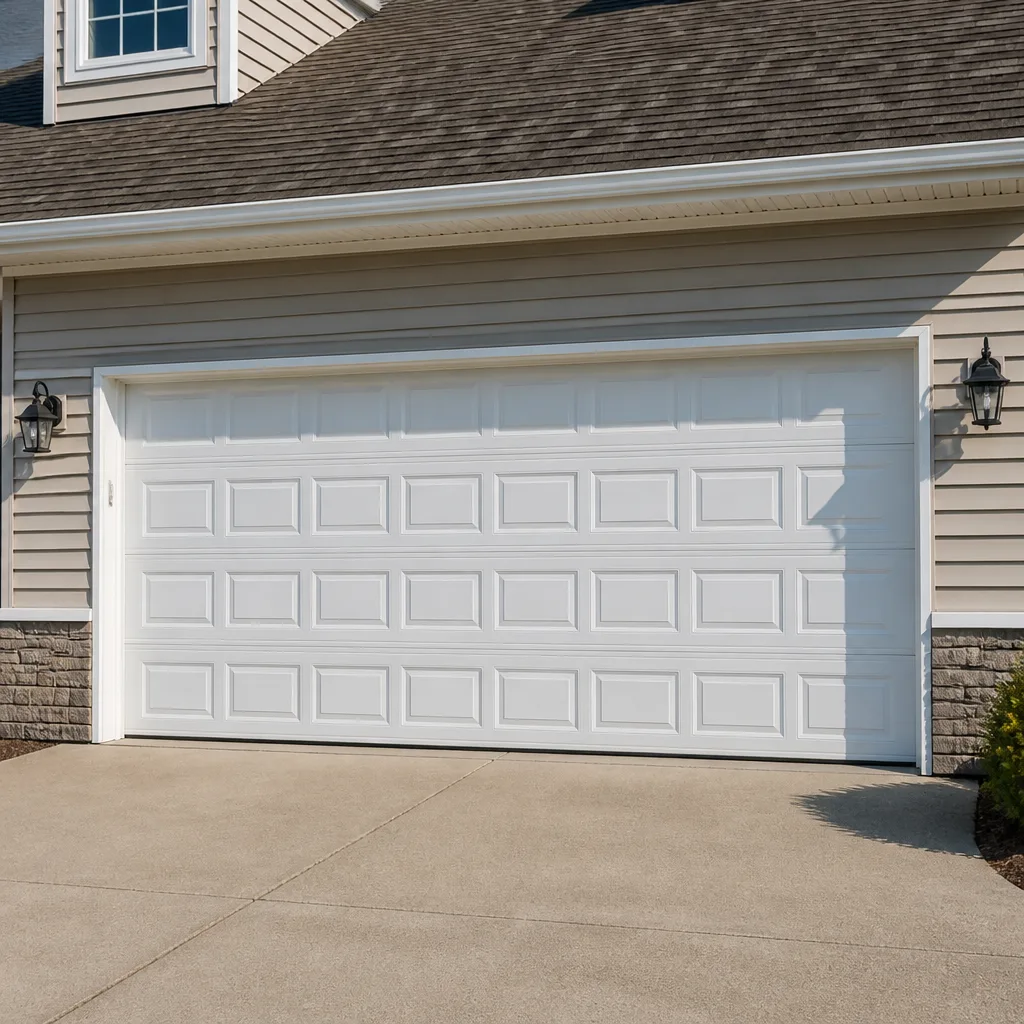 Raised-panel steel
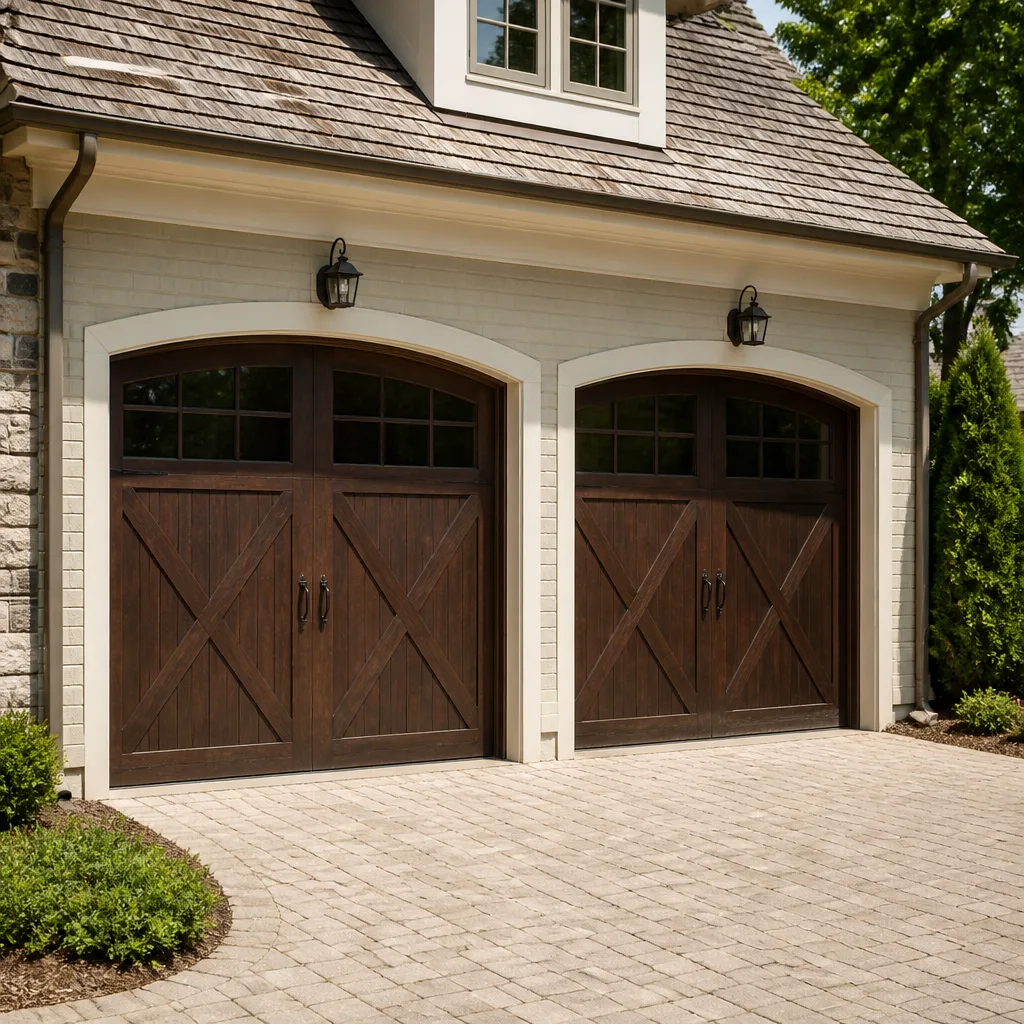 Carriage house
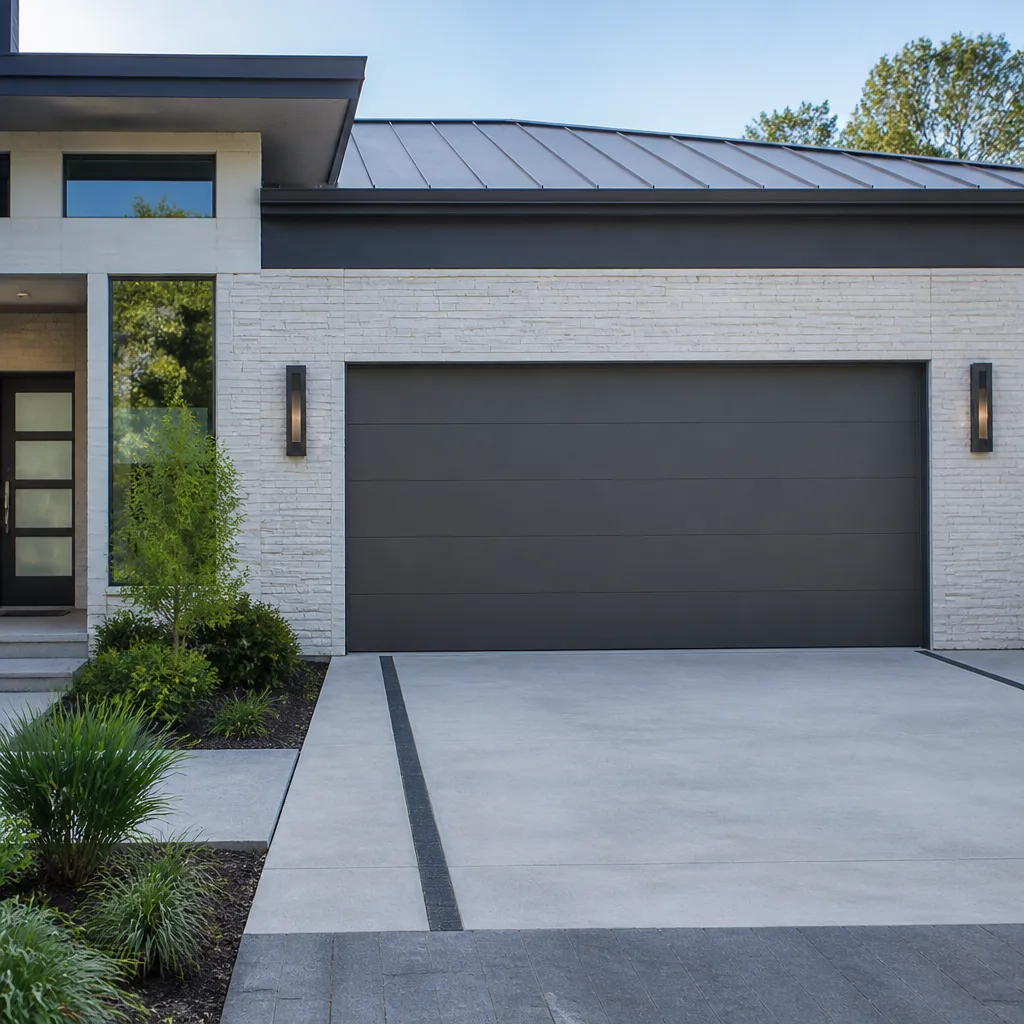 Modern flush
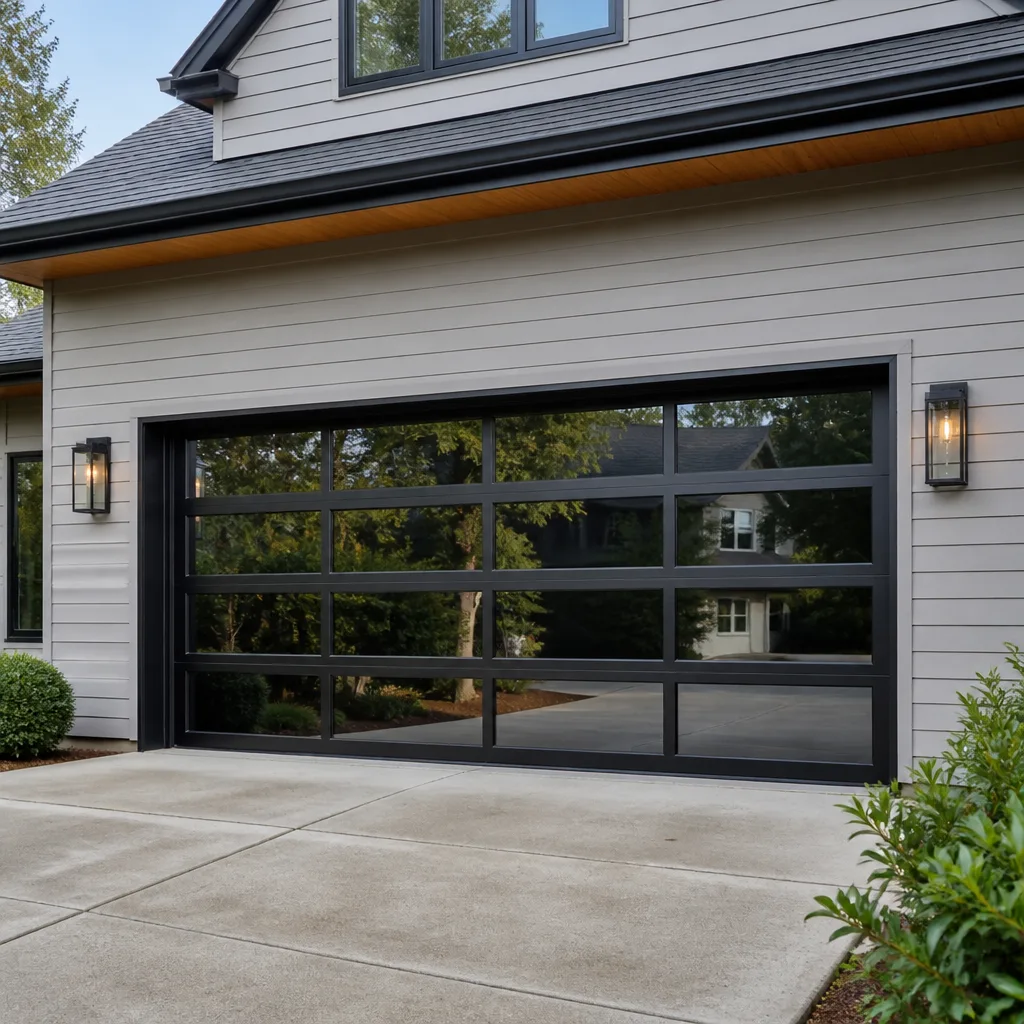 Full-view glass
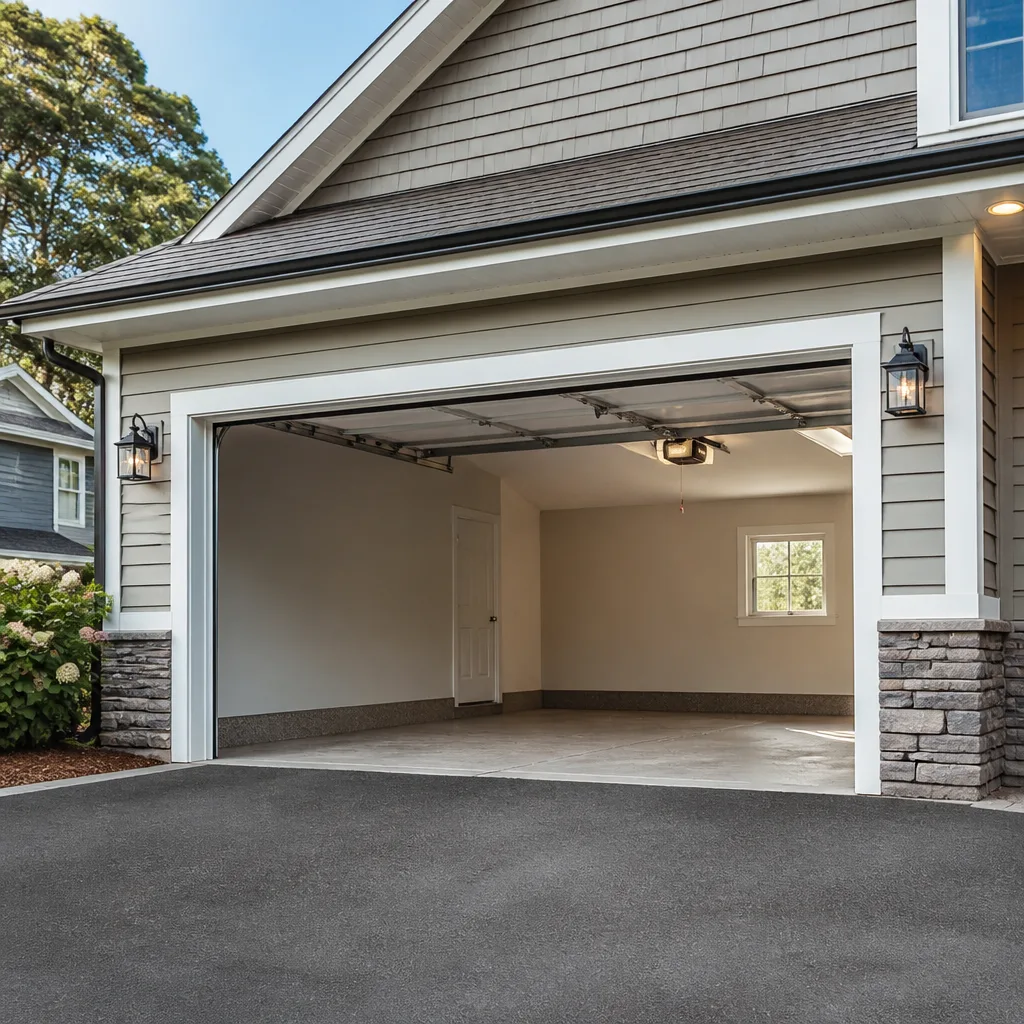 LiftMaster openers
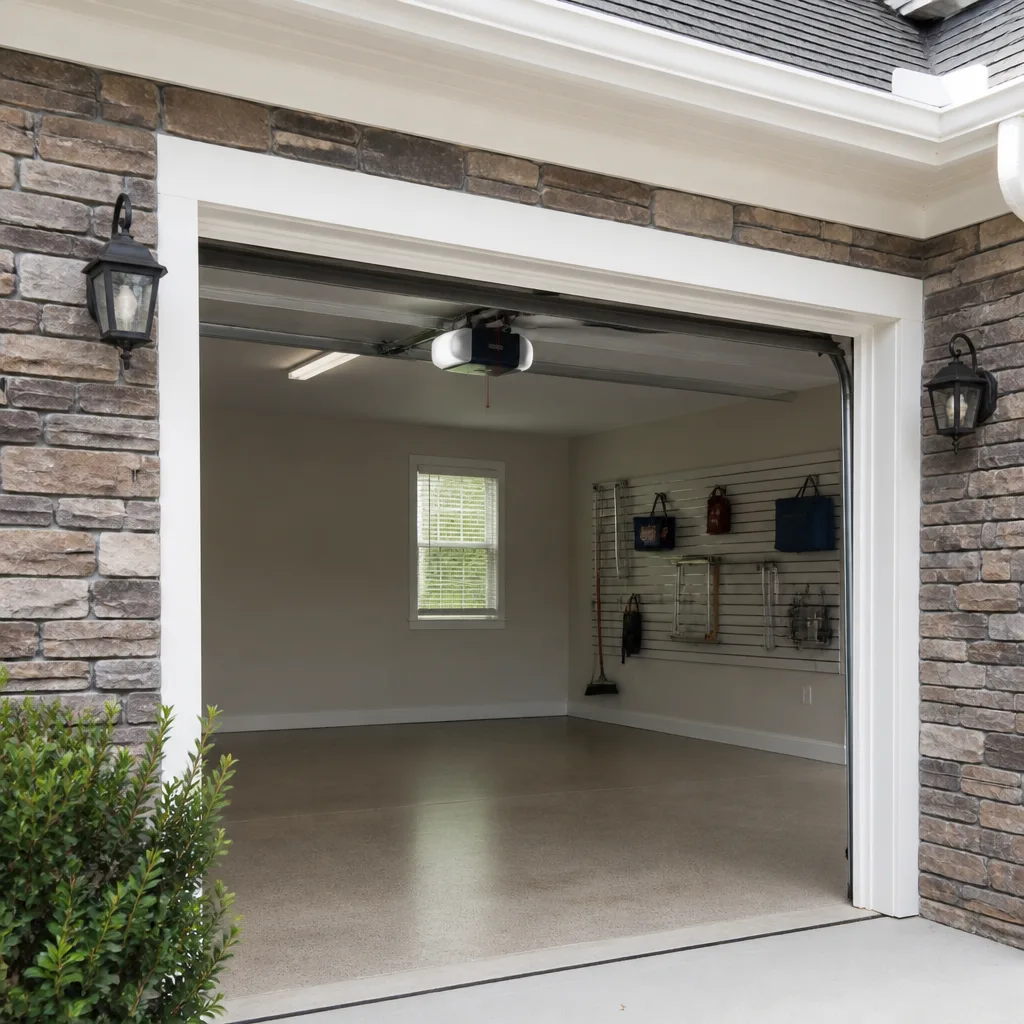 Chamberlain openers
Full 25-point door and opener safety check with every visit - springs, cables, rollers, tracks, and your LiftMaster or Chamberlain opener included
You get a price before we start. It does not change when the pro arrives.
Get your free estimateThe Complete Guide to Garage Doors in Bonita Springs
Most garage door guides are written for Ohio. They talk about ice dams, road salt on the bottom section, and four distinct seasons of maintenance. Here in Bonita Springs, the pressures on a garage door are different ones: relentless sun, humid air, and a hurricane season that decides what a door has to survive before it ever gets installed. Advice built for a colder climate can actually send you toward the wrong material, the wrong finish, and the wrong schedule.
This guide treats the Bonita Springs environment as the main character. You’ll learn how the local climate wears down specific materials at different rates, what Florida wind-load requirements mean for a door on a Bonita Springs property, which finishes genuinely hold up and which are only marketed as coastal-ready, how to build a maintenance calendar around Southwest Florida seasons, and how to plan a project so your home isn’t left vulnerable during hurricane season.
Quick Answer
A garage door in Bonita Springs needs to handle humid, sun-intense air and Florida wind-load code, so the material and finish matter more than the style. Steel with a proper factory finish or insulated aluminum usually lasts longest here, while untreated steel hardware rusts quickly and a plain steel door on the wrong wind rating won’t pass inspection. Plan installation well before hurricane season, and keep up light maintenance tied to the wet and dry seasons rather than a generic yearly checklist.
Styles & brands we work with
- Raised-panel steel
- Carriage house
- Modern flush
- Full-view glass
- LiftMaster openers
- Chamberlain openers
Table of Contents
- How Bonita Springs Climate Affects Door Materials
- Which Garage Door Materials Hold Up Here
- Florida Wind-Load Requirements for a Bonita Springs Door
- The Bonita Springs Maintenance Calendar
- Planning a Project Around Hurricane Season
- Openers and Springs: What Wears Out First
- Choosing a Door: A Step-by-Step Approach
- Common Mistakes to Avoid
How Bonita Springs Climate Affects Door Materials
Bonita Springs sits in a humid, subtropical climate where the air stays warm and moisture-heavy much of the year. That combination does two things to a garage door. First, it keeps metal surfaces damp long enough for rust and corrosion to take hold, especially on untreated hardware, hinges, rollers and the bottom section. Second, the intense sun breaks down finishes and plastics faster than in a milder climate, so a door that’s fine in a cooler state can look tired sooner here.
The garage itself makes it worse. A garage is often the least ventilated space in the home, and warm, moist air trapped inside a closed box slowly attacks any exposed steel. The bottom section takes the brunt because it sits closest to the floor, where moisture lingers.
What this means in practice:
- Untreated steel hardware and cheap fasteners show corrosion quickly, and once rust starts on a hinge or roller it accelerates.
- Paint and powder finishes fade and chalk under strong sun, and a faded top coat lets moisture reach the steel underneath.
- Wood doors absorb humidity and can warp, swell at the joints and need repainting more often than in a drier climate.
- Rubber seals and plastic trim harden and crack faster under constant sun and heat.
- Anything with a thin or decorative finish on interior hardware corrodes first because it’s never inspected.
None of this means a door here is doomed. It means the finish and the hardware quality carry more weight than most homeowners expect, and that the section closest to the floor deserves the most attention. When corrosion spreads to hinges, rollers or the track, that’s usually the point where garage door repair becomes the sensible call rather than a simple wipe-down.
Which Garage Door Materials Hold Up Here
There’s no single best door for Bonita Springs, but some materials clearly handle the local conditions better than others. The honest ranking depends on how much maintenance you’re willing to do and how much you want the door to cost up front.
Steel with a proper factory finish
Insulated steel is the most common choice for good reason. A factory-applied finish resists sun and moisture well when it’s intact, and the core insulation helps keep the garage cooler. The catch is that the finish is only as good as its condition: any scratch, chip or rust spot becomes a place for corrosion to start, so touch-up matters more here than in a mild climate.
Aluminum
Aluminum won’t rust the way steel does, which makes it appealing in humid air. It’s lighter, too, which is easier on springs and openers. The trade-off is that aluminum dents more easily and can corrode at the joints in salt-laden humidity, so the finish and the grade of the alloy matter.
Wood
Wood is beautiful and it’s the highest-maintenance option here. In humid Southwest Florida conditions, wood swells, warps and demands regular refinishing to stay sealed. If you love the look, plan on a stricter maintenance routine than any other material requires.
Composite and vinyl
These resist moisture well and don’t rust, and some are marketed as coastal-ready. The story is more mixed than the marketing suggests: the material body holds up, but the metal hardware attached to it (hinges, rollers, fasteners) is what rusts first, and sun can fade the finish over time. A composite door is only as coastal-durable as its hardware.
Our technicians have up to 12 years of experience and work on the brand you already have, including Clopay, Wayne Dalton, Amarr, Craftsman, Raynor, LiftMaster, Chamberlain and Genie. That matters when a corrosion problem turns out to be a hardware issue on an otherwise sound door: often the answer is a hardware refresh, not a whole new door. When you’re weighing a replacement against a repair, our guide to Bonita Springs Garage Door Repair Pros walks through the options.
Florida Wind-Load Requirements for a Bonita Springs Door
Garage doors in Florida are held to wind-load requirements because an opening that large is a structural weak point in a storm. Lee County, which includes Bonita Springs, follows the statewide Florida Building Code, and a garage door has to be rated for the wind pressures at its location. A door that isn’t rated correctly, or isn’t installed with the right reinforcement and anchoring, can fail in high wind and put the rest of the house at risk.
What homeowners should understand before they buy:
- Wind rating is a property of the specific door model, not the brand. The same maker sells doors at different ratings, so you can’t assume a brand name guarantees compliance.
- The rating has to match the opening and the home’s location, so the right door for one Bonita Springs property may not suit another.
- Reinforcement and installation detailing count as much as the door itself. Correct anchoring and bracing are part of what makes a rating real.
- If you’re replacing a door, the new one has to meet the code requirements in effect for that home, so verify before you order.
We don’t give legal or engineering advice on code, and the rules can be specific to your property, so confirm the exact requirement with the City of Bonita Springs building department or Lee County before you commit to a door. Ask specifically about the wind-load rating your opening needs and what documentation the installer has to provide. Getting that answer before you order saves a painful surprise at inspection.
The Bonita Springs Maintenance Calendar
A four-season maintenance calendar doesn’t fit here, because Bonita Springs doesn’t have four seasons in the way a northern guide assumes. What it has is a wet season and a dry season, plus hurricane season layered on top. A maintenance routine built around those rhythms keeps a door ahead of the climate instead of reacting to corrosion after it takes hold.
Here’s a workable annual approach:
- Before the wet season (late spring): Wash the door and inspect the finish on every section, touching up any chip or scratch so moisture can’t reach bare steel. Check the bottom seal for cracks.
- At the start of hurricane season (around the beginning of June): Test the door’s balance and the auto-reverse safety feature, tighten hardware, and confirm the door opens and closes smoothly. This is the season to make sure nothing is loose or dragging.
- Mid wet season: Look for corrosion on hinges, rollers, fasteners and the bottom section, since this is when damp air does its work. Lubricate moving parts with a product suited to humid conditions.
- Before the dry season: Recheck the finish after months of intense sun, and clean and lubricate the track and springs (visually only on springs, see below).
- Ongoing: Listen for new noises and watch for slow or uneven movement, which usually signals a spring, roller or opener issue before it becomes a failure.
One hard safety rule on that last point: never try to adjust, remove or “help” a torsion spring or the cables attached to it. Those parts are under extreme tension and can cause serious injury if handled by anyone untrained. Visual checks and lubrication of the safe moving parts are fine; anything involving the spring itself is a job for a trained technician. That’s why spring work is its own specialty here, and our garage door spring repair page explains what’s involved safely.
Planning a Project Around Hurricane Season
Hurricane season is the single biggest scheduling consideration for a garage door project in Bonita Springs, and the mistake people make is starting too late. An install takes time for measuring, ordering and scheduling, and you don’t want a half-finished project, or a door that’s been removed, when a storm approaches. The safe approach is to finish the job well before the season peaks, not during it.
How to sequence a project so your home is never left exposed:
- Measure and order early. Get the door measured and the model chosen and ordered with enough lead time that installation isn’t landing in the heart of storm season. Spring and early summer are sensible windows to aim for.
- Never leave an open opening. A door replacement removes your existing door at some point. Confirm the installer’s plan for securing the opening the same day, so the house isn’t left with an uncovered opening overnight.
- Match the door to the code requirement first. Order the correct wind-load-rated door and reinforcement so the finished install is compliant before the first storm, not patched afterward.
- Keep the old door until the new one is ready. If the existing door still functions safely, there’s no reason to remove it before the new one is on site.
- Test everything the day it’s installed. Balance, auto-reverse, smooth travel and a clean seal. A door that worked in the shop needs to work on your opening.
Because installation is measured, ordered and scheduled work, it isn’t a same-day job. That’s fine, and it’s the right way to do it: a proper free measure and a written price up front beat a rushed install. Plan the timeline around the season and the project stays calm.
Openers and Springs: What Wears Out First
On a Bonita Springs door, the parts that fail first are usually the ones most exposed to heat, humidity and daily use. The opener motor itself tends to last; it’s the surrounding parts and the door’s balance that cause most problems.
Springs. Torsion springs carry the door’s weight and do the hardest work in the system. Constant heat and daily cycling wear them out, and when one breaks the door becomes heavy and unsafe to lift. A broken spring is the most common reason a door won’t open, and it’s the job to hand to a specialist. Never try to lift a door with a broken spring by force, and never attempt spring work yourself; the stored tension is genuinely dangerous.
Openers. Heat, humidity and power surges take a toll on opener electronics and on the moving parts of the rail and trolley. A door that opens partway and stops, reverses for no reason, or makes grinding noises often points to the opener or its settings rather than the door. Our garage door opener repair page covers the common symptoms in more detail.
Hardware and seals. Hinges, rollers, fasteners and the bottom seal are the corrosion frontline. They’re cheap to replace and expensive to ignore, because a rusted roller or hinge puts strain on the opener and springs.
We service LiftMaster, Chamberlain, Genie, Clopay, Amarr, Wayne Dalton, Craftsman and Raynor, so when the opener or door is one of those lines, a technician can diagnose the actual system in front of them rather than guessing at a generic stand-in. One call covers repair, opener work, springs and installation, so there’s no second vendor to chase.
Choosing a Door: A Step-by-Step Approach
The order in which you make decisions matters, because choosing a look first and checking code and climate fit second is how people end up with the wrong door. Work through it in the right sequence and the result holds up.
- Confirm the code requirement first. Find out the wind-load rating your opening needs before you fall in love with a style. Ask the city or county building department to confirm.
- Pick the material for the climate. Weigh steel, aluminum, wood or composite against how much maintenance you’re willing to do in humid, sunny conditions.
- Choose the finish with an eye on the sun. A finish that resists UV and moisture protects the material underneath; a thin decorative finish on cheap hardware is where corrosion starts.
- Size the opener to the door. A heavier insulated door needs an opener rated for it, and the springs need to be matched to the door’s weight.
- Get a free measure and a written price. The price is quoted and agreed before any work starts, so the written estimate is the number that counts, not a rough verbal figure.
- Schedule with the season in mind. Avoid leaving the opening exposed during hurricane season, and plan the install for a clear window.
Choosing well is mostly about resisting the two easy mistakes: buying on looks alone, and trusting a “coastal-ready” label without checking the hardware and the wind rating. Do the boring steps first and the door will serve you far longer in Bonita Springs conditions.
Common Mistakes to Avoid
- Buying a door on style before checking the wind rating. In Lee County the rating has to match the property, so a beautiful door with the wrong rating is a failed inspection waiting to happen. Confirm the requirement with the building department first.
- Trusting “coastal-ready” without looking at the hardware. A composite or vinyl body may resist moisture, but the metal hinges, rollers and fasteners attached to it are what rust first here. Check the whole assembly, not just the panel.
- Ignoring small rust and chips. In this humid air a small rust spot or a chipped finish grows faster than you’d expect. Touch-up now is cheaper than replacing sections later.
- Trying to fix a spring yourself. Torsion springs are under extreme tension and can cause serious injury. Visual checks only; leave spring work to a trained technician.
- Following a four-season maintenance calendar. Bonita Springs doesn’t work that way. Build the schedule around the wet season, the dry season and hurricane season instead.
- Starting an install in the middle of hurricane season. A half-finished project or an open opening during a storm is a real risk. Measure, order and schedule early enough to avoid it.
- Choosing an opener without matching it to the door. An opener rated for a lighter door will strain under a heavy insulated one, and mismatched springs wear out faster. Match the whole system.
See the difference
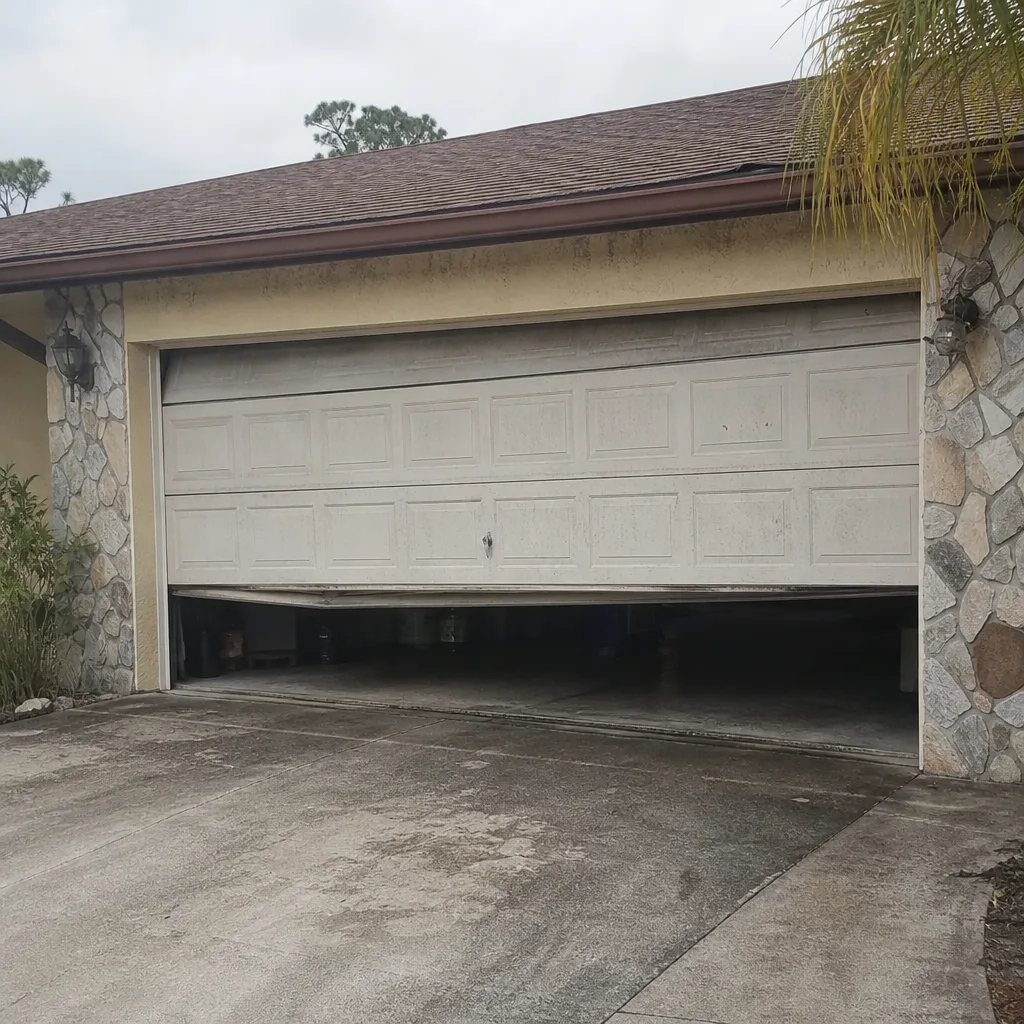 Before
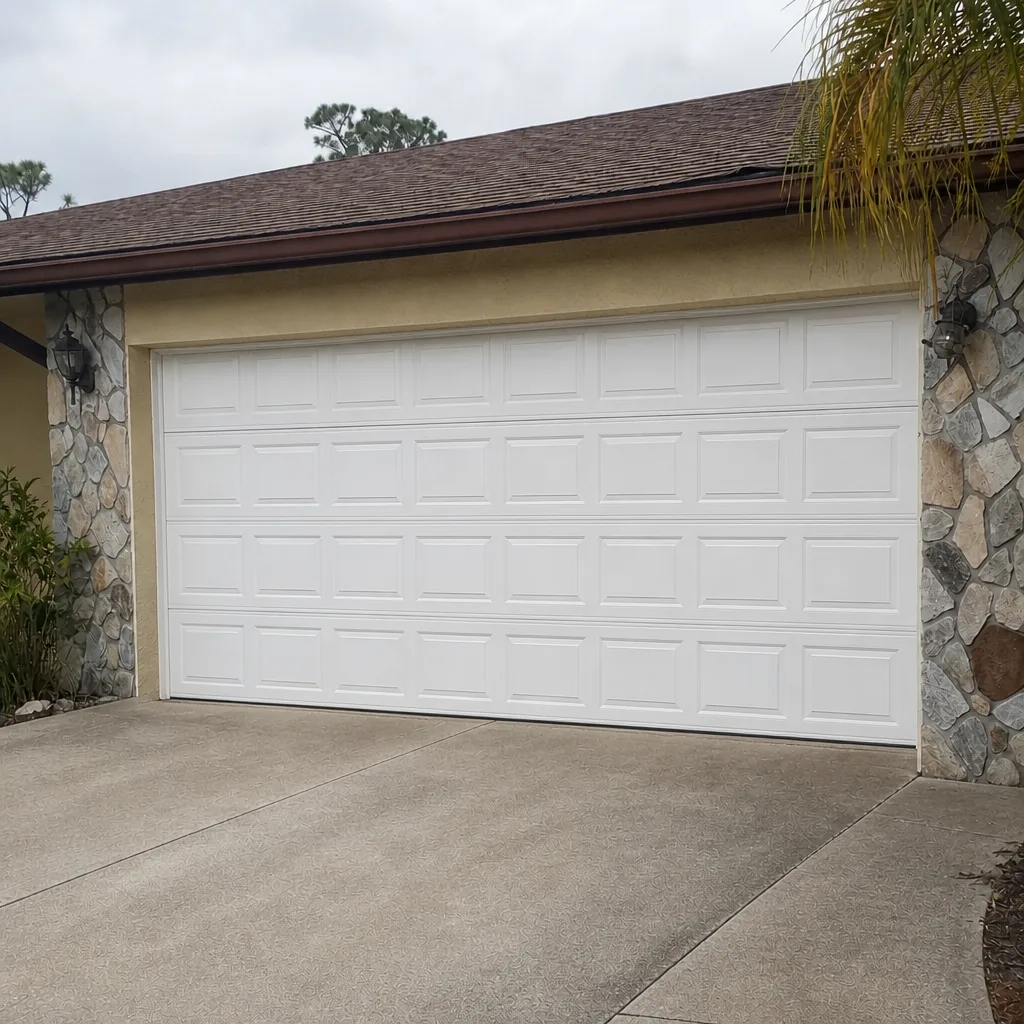 After
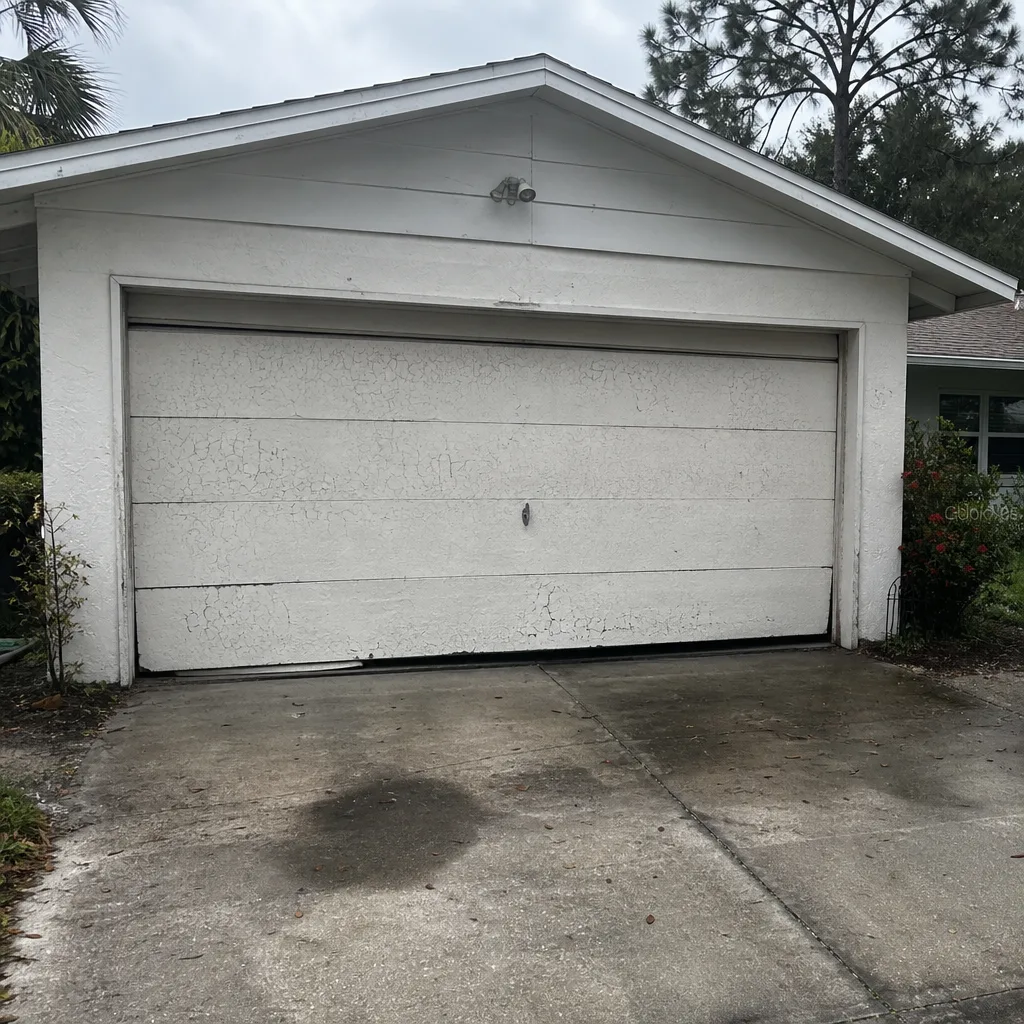 Before
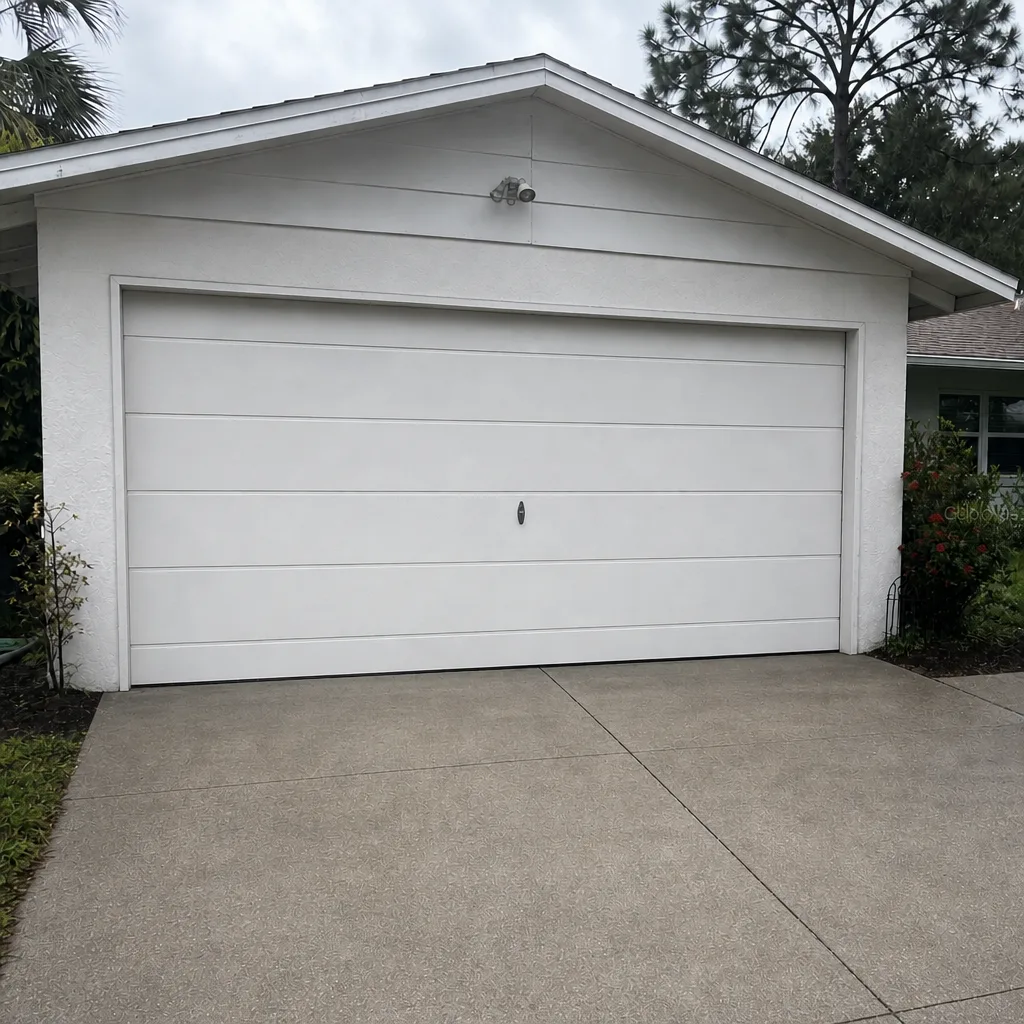 After
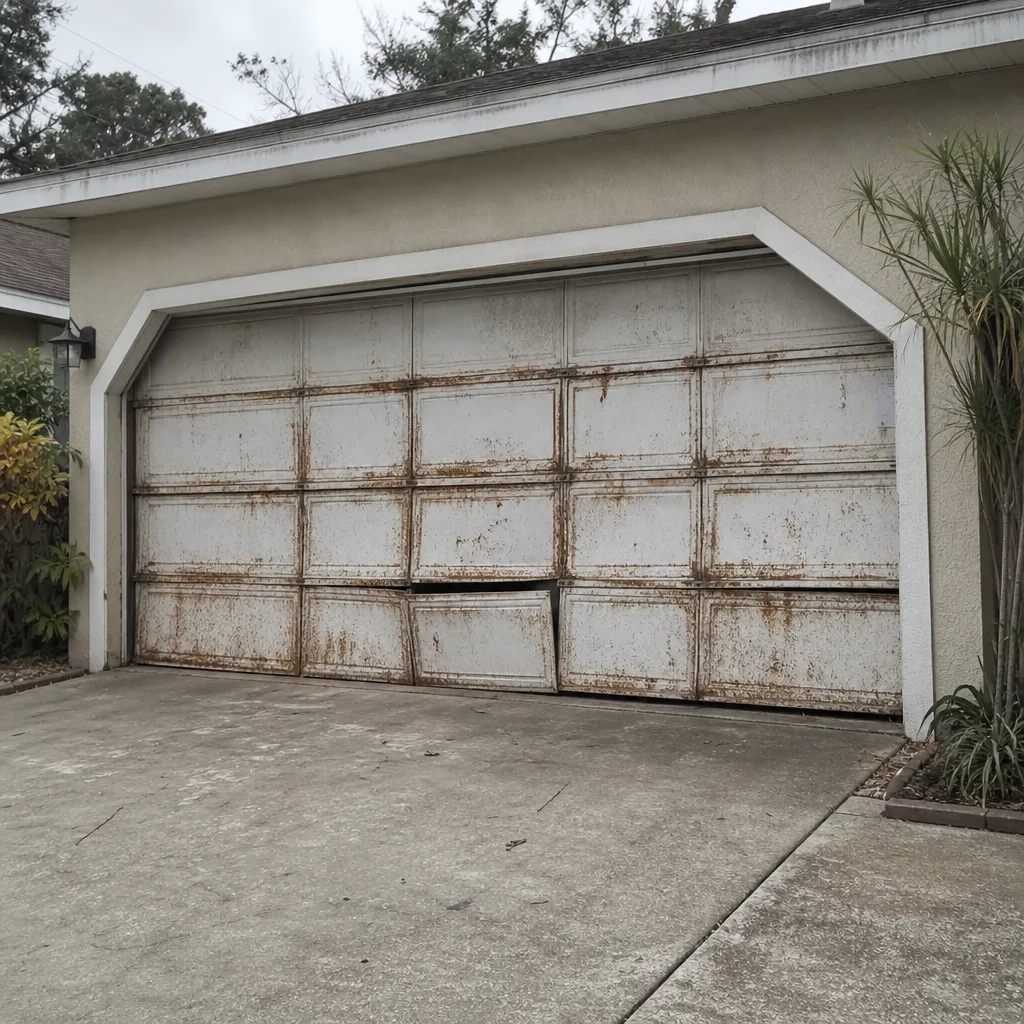 Before
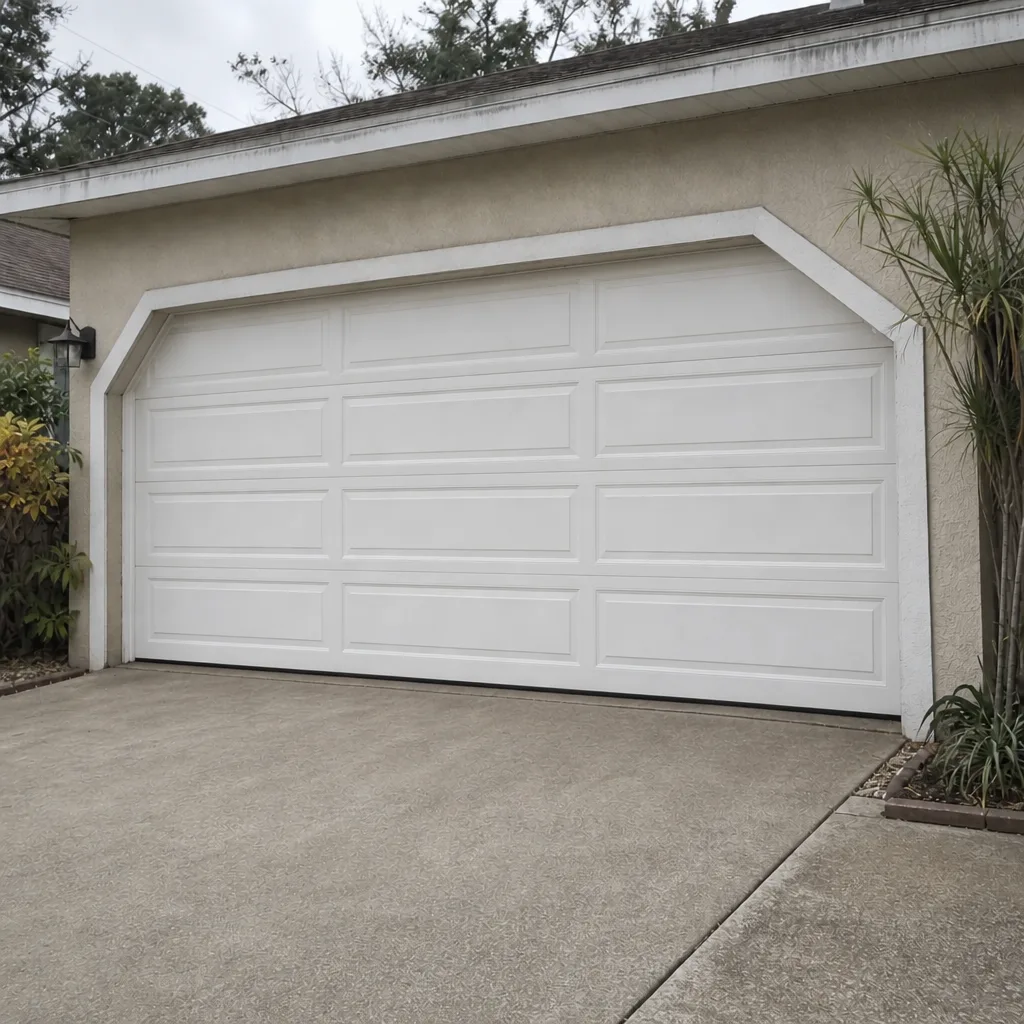 After
When to Call a Professional
Some garage door problems are a wipe-down and a lubricant; others need a trained hand. Call a professional if the door won’t open or close, if a spring has broken, or if the door is heavy, jerky or off its track. Call if the opener reverses for no reason, grinds, or stops partway, and if you see corrosion spreading into the hinges, rollers or track. Any spring or cable work should always be a professional job, given the stored tension involved. If the door is more than a cosmetic refresh from a safer, code-compliant setup, a free estimate will tell you whether repair or replacement is the better spend. Bonita Springs Garage Door Repair Pros offers free estimates in Bonita Springs, and we’re a single-trade specialist, so one call covers it. Call (866) 647-2827. We answer 24/7. Fast dispatch from 7am to 7pm, Sunday through Friday.
Frequently Asked Questions
Insulated steel with a good factory finish or aluminum is usually the best balance here. Steel handles the humid air well when the finish stays intact, and aluminum resists rust and is easier on springs and openers. Wood looks best but demands the most refinishing in humid conditions, and any “coastal-ready” door is only as durable as its metal hardware.
Yes, garage doors in Lee County, including Bonita Springs, have to meet Florida Building Code wind-load requirements for the property. The rating belongs to the specific door model, not the brand, and correct reinforcement and installation are part of what makes it valid. Confirm the exact requirement with the City of Bonita Springs building department before you order a door.
Build the routine around the local seasons rather than a single yearly visit. Check and touch up the finish before the wet season, test balance and auto-reverse at the start of hurricane season, watch hardware for corrosion through the wet months, and clean and lubricate the safe moving parts before the dry season. Always leave spring and cable work to a professional.
Humid, warm air and a poorly ventilated garage keep metal surfaces damp long enough for corrosion to take hold, starting with hinges, rollers, fasteners and the bottom section. Thin decorative finishes on cheap hardware go first. Switching to better hardware and keeping the finish intact slows it down a lot.
Yes, installation can be scheduled during hurricane season, but it’s safer to plan the project well before the season peaks. Measure, order and schedule early so the job never leaves the opening exposed when a storm approaches, and confirm the installer secures the opening the same day the old door comes off. Installation is measured and scheduled work, so you’ll get a free measure and a written price up front.
Spring repair is a same-day priority whenever we can reach you, because a broken spring makes the door heavy and unsafe. We answer 24/7, with fast dispatch from 7am to 7pm, Sunday through Friday. A call outside dispatch hours is booked into the next opening. Never try to force the door open or touch the spring yourself. Call (866) 647-2827 for an exact quote, and the price is set by the written estimate before any work starts.
The Bottom Line
The Bonita Springs environment asks more of a garage door than most national guides assume. Humid air attacks untreated hardware, intense sun breaks down finishes, and wind-load code decides what you can install before style enters the picture. Choose the material and finish for the climate, confirm the code requirement for your property, and build a maintenance routine around the wet season, dry season and hurricane season rather than a northern four-season calendar. Keep spring and cable work in professional hands, and plan any project early enough that hurricane season never catches you with an open opening. Do the boring steps first and a garage door here lasts far longer.
If you’d rather have a trained specialist diagnose and handle the whole job, call Bonita Springs Garage Door Repair Pros at (866) 647-2827 for a free estimate. We’re a single-trade garage door company, we work on the brands you already have, and one call covers it: repair, opener work, springs and full installation.
Written by the team at Bonita Springs Garage Door Repair Pros.